
The Contractor’s Choice for Uniform Application
Wood Defender Fence Stain, the premier product of the Wood Defender line, has protected wooden fences across the U.S. since 1960. Its easy-to-use application has made it a favorite among both homeowners and professionals. What truly sets this product apart is its unique pigment formulation, which beautifully accentuates the wood’s natural grain and texture.
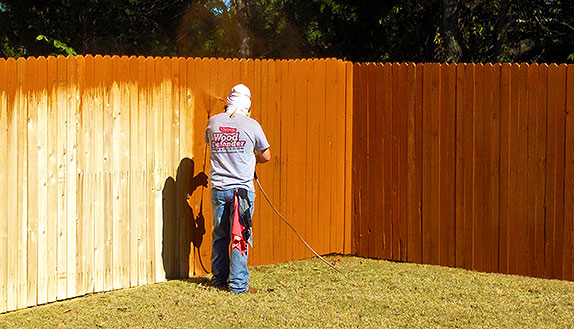
Please be aware that the Wood Defender Fence Stain retains a slight oiliness on the surface, making it unsuitable for deck areas where individuals might walk or congregate. For such applications, it’s advisable to utilize the Wood Defender 200 Series Stain & Sealer, tailored specifically for horizontal surfaces and high-foot traffic zones.
A Stain Anyone Can Apply
By “anyone”, we genuinely mean it. The product doesn’t produce lap marks, ensuring a consistent outcome, whether it’s Bill or Jane using it. No need to worry about touch-ups or uneven spraying. Just make sure the wood is thoroughly soaked with the product. Adhere to the suggested application rate of 150-250 square feet per gallon, and spray to your heart’s content. The result? A beautifully stained fence!
Choosing Opaqueness
For a new fence, a transparent stain will accentuate the wood’s innate charm and grain pattern. However, for older, previously stained, or weathered fences, a semi-transparent stain is recommended. It offers greater coverage and ensures a consistent finish on the surface.
A Properly Prepared Surface is Key
Make certain the surface is meticulously cleaned, dried, and free from contaminants such as dust, dirt, mildew, oil, and moisture. For weathered wood, consider using Standard Clorox Bleach (in the blue bottle) or an Oxygen Bleach Wood Cleaner before stain application.
Applying the Stain
Start by applying the stain with a sprayer (preferred method), brush, or roller, ensuring it fully saturates and deeply permeates the wood fibers. Please avoid diluting the Fence Stain and ensure you apply it when the temperature is 50 degrees Fahrenheit or higher. Begin staining from the top of the pickets, moving downward in a sequential manner. For safety, wear a respirator while spraying. If rain is expected within the next 24 hours, consider rescheduling the staining to a clearer day.
